
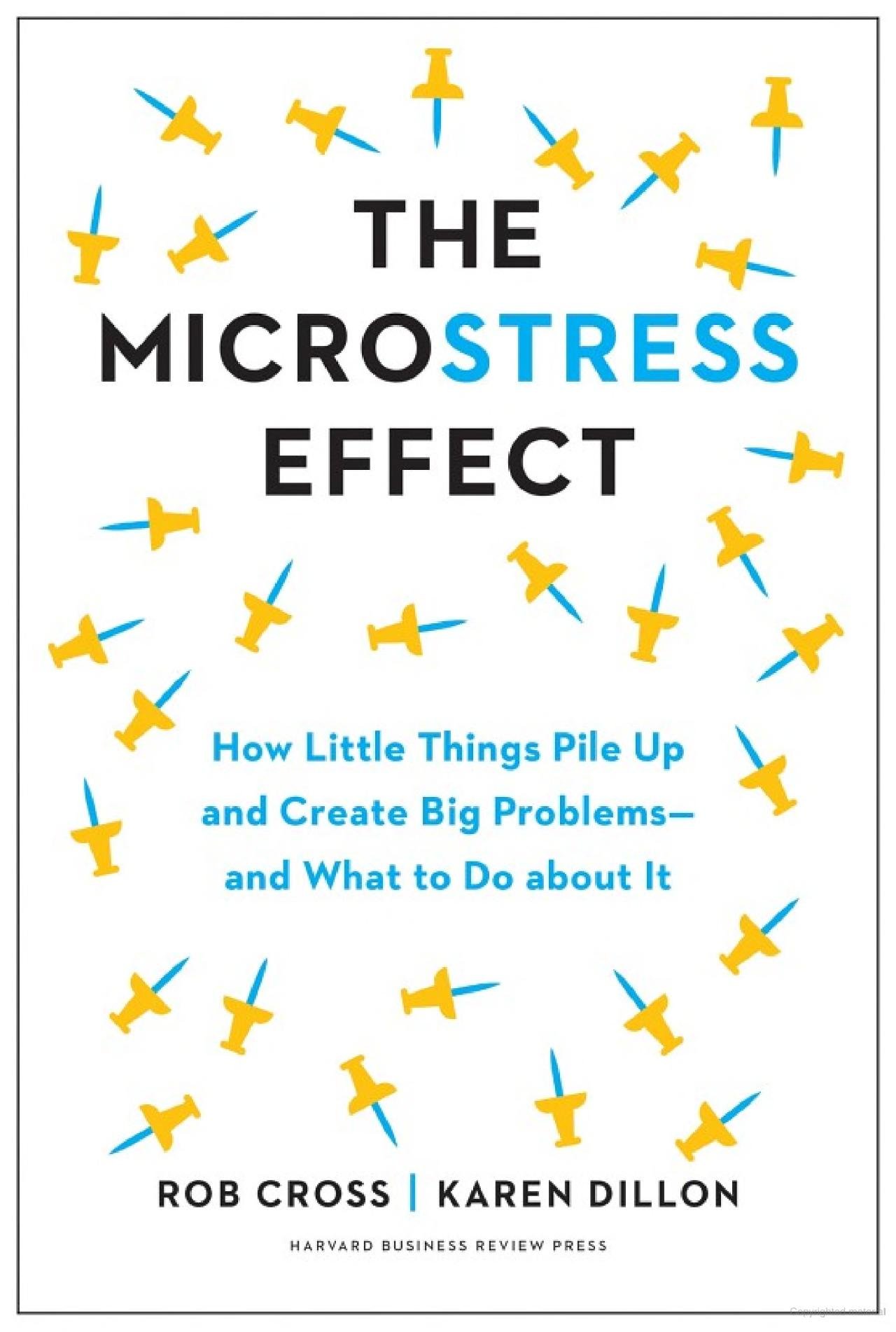
The Microstress Effect: How Little Things Pile Up and Create Big Problems--& What to Do about It
by Rob Cross & Karen Dillon
-
Review: The Microstress Effect, by Rob Cross and Karen Dillan, does a great job of explaining how microstressors are inevitable but can be managed with intentional community building. This book highlights how through creating dynamic personal lives, we can negate the impacts of microstressors on ourselves and those around us. The authors remind us that we are not immune from causing tension in our own social and professional circles. It is imperative that we actively reduce the harm caused when we understand how we are creating strain for those in our lives. While we will never rid ourselves of the world’s stressors, this book highlights that through creating dynamic personal lives, investing in clear communication with others, and setting intentional boundaries, we can negate the impacts of how microstressors impact us and those around us.
-
“Many of the people we interviewed shared with us how interactions at work had slowly caused them to shift their values in small steps, until suddenly, when they stopped to look, they didn’t quite recognize who they were anymore. They were just different somehow. This was particularly acute for people whose sense of identity revolves around work. When work is the primary way we identify who we are and what our values is to the world, we can find ourselves simply “going along” with pushes and pulls to our self-identity because we’re party of something larger.”
-
Can you identify 2-3 microstressors you can address in your life?
What helps you counter the effects of microstress in your life?
Who in your community can help you invest in your identities outside of work?
When do you think you took a life goal a step too far and created extra stress for yourself?
Can you think of how one tiny decision has impacted you long term?
How can you add boundaries in your life to help mitigate your microsstressors?

Can’t Even: How Millennials
Became the Burnout Generation
by Anne Helen Petersen
-
Prior to reading this book I believed that burnout was 100% my responsibility. While we each need to take onus over our lives, highlights the systematic issues at play that contribute to societal burnout. This book gives an overview on how work has gotten so exhausting over the years and why the workers need to take their collective power back from the stakeholders where they work.
-
"We convince workers that poor conditions are normal; that rebelling against them is a symptom of generational entitlement; that free-market capitalism is what makes America great and this is free market capitalism in action. It turns legitimate grievance, backed by a union or not, into “ungratefulness” And it standardizes over work and surveillance and stress and instability – the very building blocks of burnout.”
-
At what age did you start feeling busy?
What expectations were placed on your education?
How were you raised to look at your career?
What was your definition of burnout before and after reading this book?
How has burnout impacted your time away from work?
What boundaries do you place between your career and your identity?
Systemically, how have systems been contributing to your burnout?
How do you take care of yourself during burnout?
What expectations should you have on your employer about negating your burnout?
If you can implement one change at your job to help with work/life harmony, what would it be?
