We use the term work/life harmony instead of work/life balance intentionally. Balance suggests a 50% equation between our work and home lives, but in reality, work is only 1/3 of our weekdays. Work/life balance may lead to guilt if one side requires more attention than the other, such as when our human needs show up in our work environment. We aim for harmony, which encourages boundaries that create symmetry between your personal and professional needs.
Poolside’s goal is to help individuals determine what healthy boundaries look like between themselves and their careers. Each book is selected to educate the readers on various aspects of work/life harmony. Please join us as we read and provide reflection questions on various topics such as burnout, boundary-setting, and how to log off mentally from work at the end of your day!
Below, we have provided the book recommendation, our review, and some facilitation questions to help you and/or your group reflect and implement sustainable goals for work/life harmony. Enjoy being poolside :)
Poolside Bookclub
Books to inspire work/life harmony

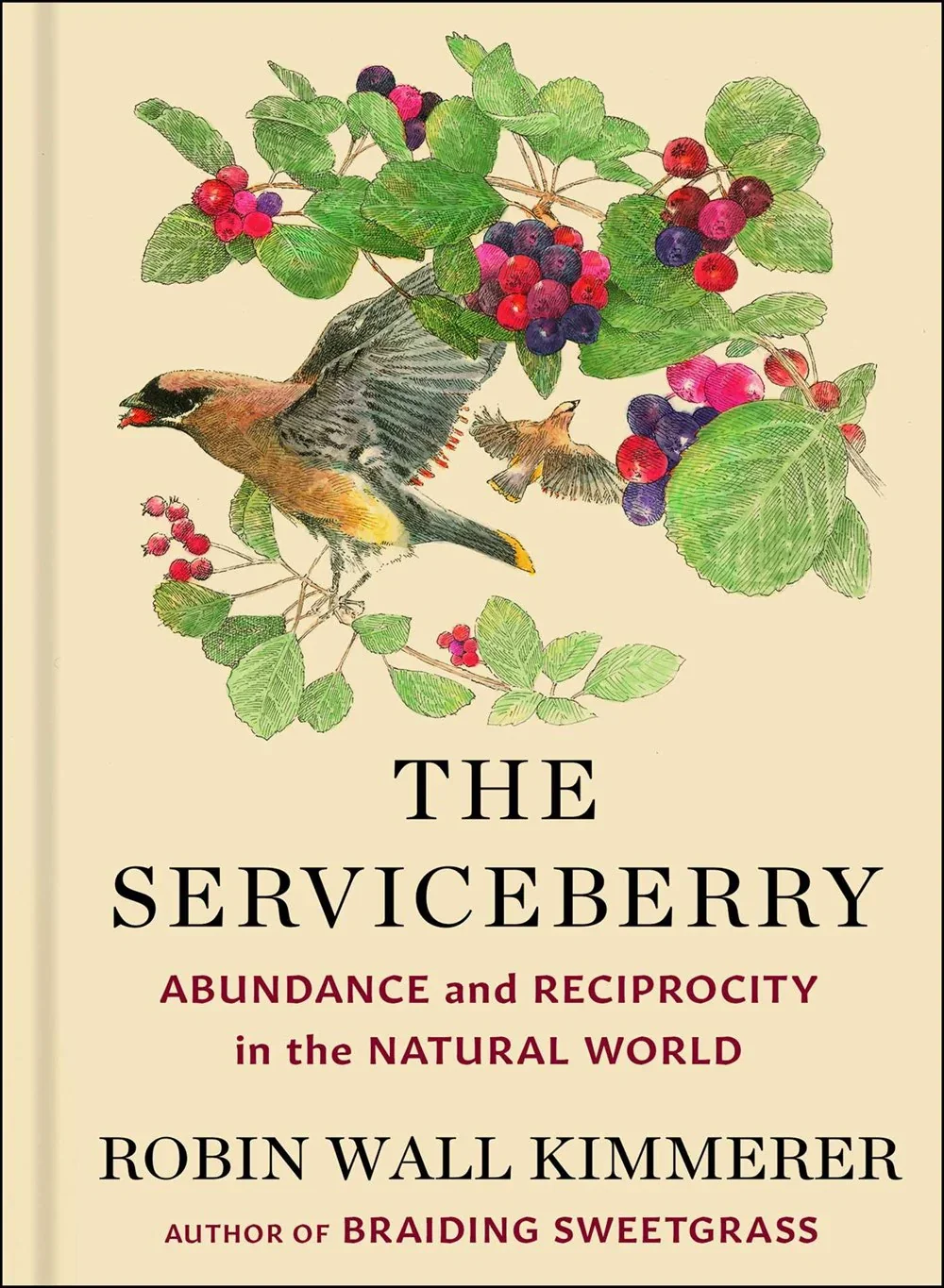
The Serviceberry
by Robin Wall Kimmerer
-
Review: The Serviceberry by Robin Wall Kimmerer is a call to community. The book encourages all of us to embed ourselves within the gift economy; to get to know and help out our neighbors. This book is a timely reminder that we are stewards of this earth and are accountable to each other and our futures. Our world is abundant, yet capitalism pushes scarcity to enable profit. While capitalism isn’t going anywhere any time soon, we can incorporate gift economies with our communities. Reciprocity looks like starting a community garden, building a free food stand for your hungry neighbors, or hosting a little library box at the edge of your lawn. Sharing our blessings and time within relationships creates a ripple effect of kindness. The Serviceberry is an incredible read, and I highly recommend reading Robin Wall Kimmerer’s other books. Nature essays are an incredible way to reverse our burnout when we cannot easily access a forest.
-
“To name the world as a gift is to feel your membership in the web of reciprocity. It makes you happy– it makes you accountable.”
-
Can you think of ways to incorporate the Honorable Harvest agreements into your life? If so, how?
What is your personal relationship with consumption?
What communities would you say you are a part of? How do you participate in them?
When did you last receive help from your community? Have you paid it forward?
How do you see yourself as a member of our Earth’s reciprocal web?
Can you identify any examples of a gift economy in your neighborhood and community?
Are you able to think of any examples of the gift economy within the natural world?
What are three ways you can start participating in the gift economy?
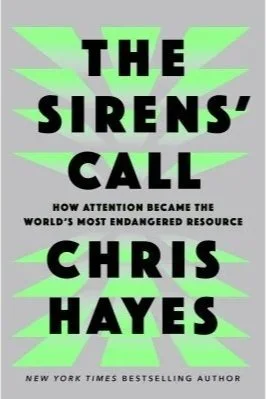
The Sirens’ Call:
How Attention Became the World’s Most Endangered Resource
by Chris Hayes
-
Attention is capitalism's biggest money maker, and The Siren’s Call by Chris Hayes does a great job informing us on why technology was developed to be such a time suck. This book explains how our phones are designed to be tiny sirens in our pockets. The longer an app on your phone can grab your attention, the longer the company can make money from you watching their ads.
This book examines how various structures (such as endless scrolling, personal algorithms, and data sharing) were developed to profit from you. You learn how little oversight is actually given into the tech world and how freely they are allowed to extract our attention for profit. Our social media feeds are perfectly curated to show information that we agree with and becomes a dopamine addiction of endless scrolling. Companies are not held accountable for fact checking clickbait, reducing spam, or reigning in online trolls because all of those mechanisms boost engagement. Understanding these structures can help you know how you fit into their money-making scheme. You can ask the liberating question: Is my attention worth giving this company more money?
-
Information is abundant; attention is scarce. Information is theoretically infinite, while attention is constrained. This is why information is cheap, and attention is expensive.
-
What is your relationship with boredom?
Do you actively choose how you keep your mind busy?
How do you currently limit your screen time?
How would you sort your phone apps into net positives versus net negatives?
Which apps can you turn off your notifications for?
What would you be doing if you weren’t looking at a screen?
What in your life can be analogized?
How are people making money off of your digital footprint?
-
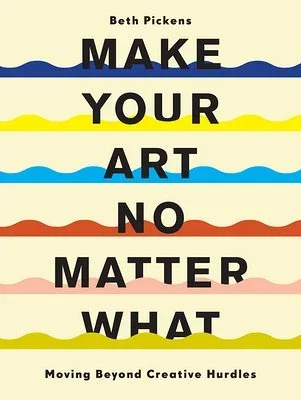
Review- Make Your Art No Matter What, by Beth Pickens, was a crucial read for me. As a kid, we get asked about what we want to be when we grow up and being a burnt out adult was never on my bingo card. I looked up one day and all I did was work, eat, sleep, and repeat. I was exhausted with no room to allow other activities into my life. I used to be a musician, an artist, an actor, and all of these activities were a huge part of my identity and I just let them fall to the wayside.
The happiest people I know are multi-dimensional. They never pigeon holed their identities to just their career. They still play their instruments , take time in their artist studio, and never sacrificed their hobbies. They never let their artistic identities disappear but let them grow alongside their career. When I started taking up photography as an adult, I noticed my world widened. While I would still get stressed out about work, it wasn’t the only focus I had. I had an outlet to get away from the world and my responsibilities. Many of the clients I work with turned away from their passions but once they started to take back their time outside of work with their hobbies, they found relief again.
To fully heal from burnout, we have to take our lives back. This book helps identify roadblocks and addresses the ways we can work past them. This book is a reminder for those of us who work full time that we have to downgrade the importance of our jobs in our story, and allow our inner artist to grow and flourish. I hope this book can help you do that like it did for me.
-
“Artists are people who are profoundly compelled to make their creative work, and when they are distanced from their practice, their life quality suffers.”
-
What is your relationship with the word artist?
How have you designed your lives to make you too busy to focus on your passions?
What presents itself as roadblocks when you get stuck on your creative projects?
Are there current art projects you have been putting off?
What is the smallest first step you can get you to work on your art?
How can you make your alone time more enjoyable with art?
What is the boundary between intuition and toxic thought when it comes to processing your art?
Make Your Art No Matter What
by Beth Pickens


The Diversity Gap
by Bethaney B. Wilkinson
-
Review: The Diversity Gap by Bethaney B. Wilkinson is as timely of a read now as it was when released in 2021. The progress that diversity, equity, and inclusion activists have made over the years is currently under attack by our administration. We have seen the companies who have rolled back their DEI initiatives and it’s past time that we all do our part. To create the liberated society we envision and deserve, those in leadership will have to get comfortable with the uncomfortable and follow the guidance of abolitionist who have been doing this work for a long time. Wilkinson educates us on how we as individuals can make an impact where we work, while providing suggested actions to create environments that challenge systems of white supremacy. This book shows why we must commit to DEI work for the long haul instead of seeking short term solutions. With first hand experiences from the author and the clients she works with, this book will help you build the courage to imagine a better world.
-
“As the problems of racism and white supremacy became more glaring, especially in the organizational context, liberation became nonnegotiable. Everything else felt like a bandaid.”
-
What values of white supremacy can you identify in your workplace?
Do you think your organization is focused on diversity, reconciliation, or liberation for it’s employees?
How is your company proactively anti-racist?
What were you taught personally about racism and anti-blackness growing up?
What systems of white supremacy do you personally uphold and how can you proactively challenge them?
How is your leadership styles impacted by your internal biases?